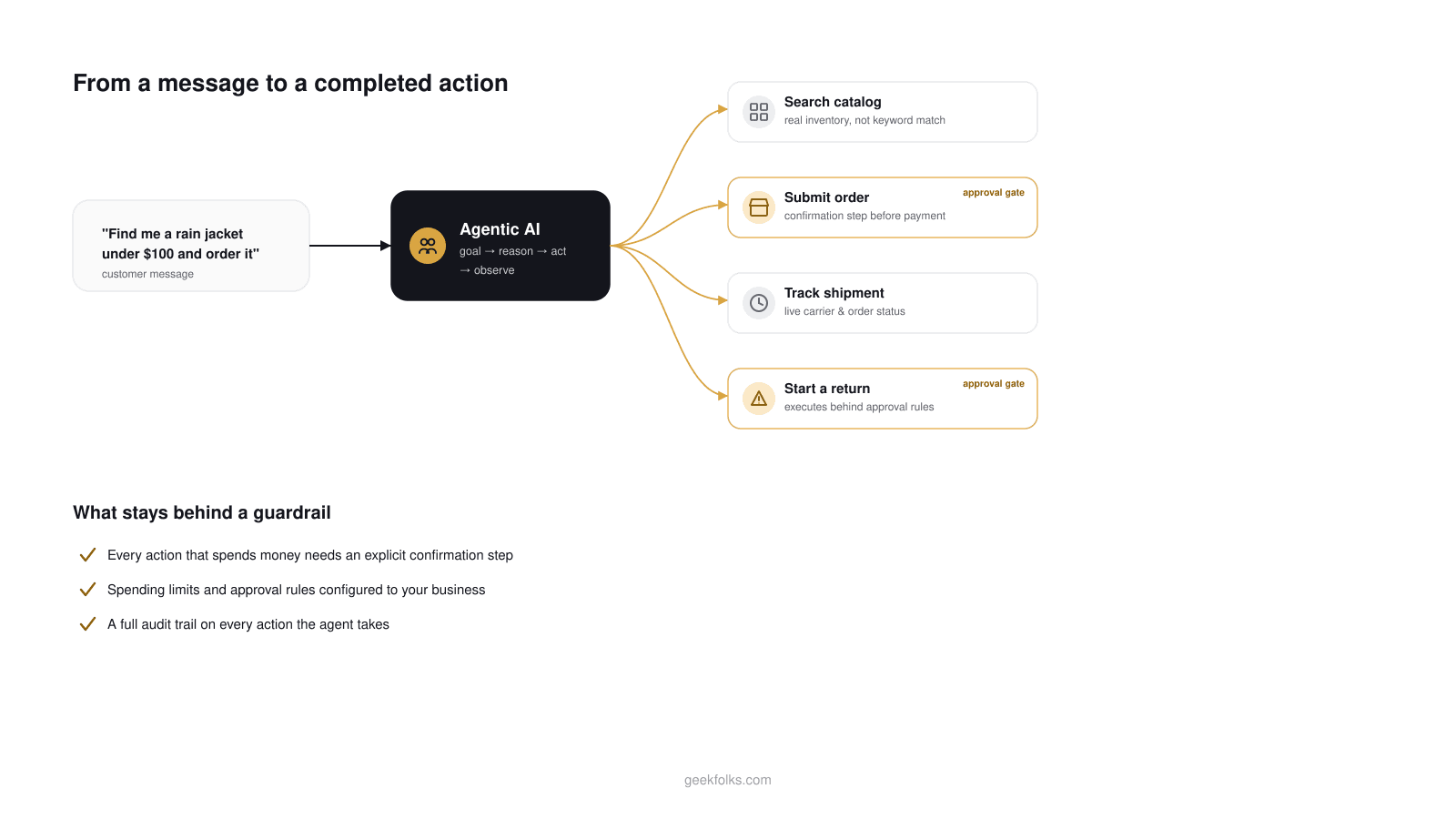
TL;DR: "AI for e-commerce" usually means a recommendation widget or a chatbot that can describe your return policy. Agentic AI is a different category: an agent wired into your actual product search, cart, and order-tracking systems, so a customer can find a product, place an order, or check a shipment status inside the conversation — as real actions, with approval gates on anything that spends money.
Who is this for? E-commerce and product leads evaluating whether "agentic AI" is a real capability for their storefront or still marketing language.
Where "AI for e-commerce" usually stops
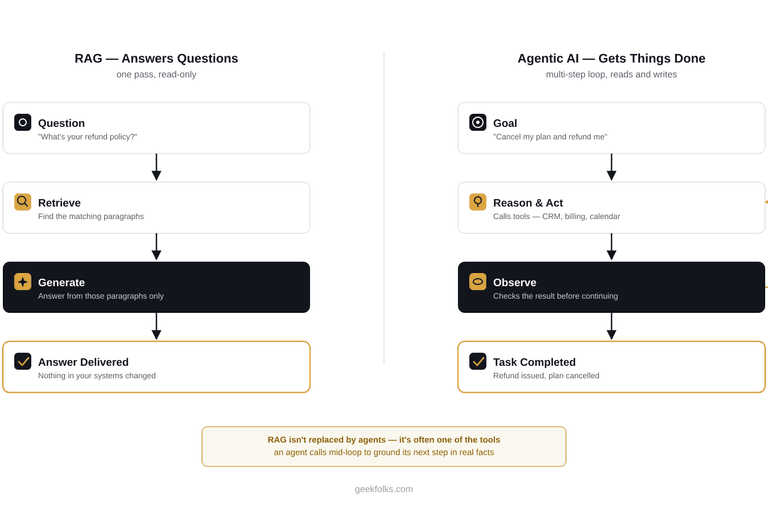
Most e-commerce AI in production today is read-only: a recommendation engine, a search re-ranker, or a chatbot that answers questions from a knowledge base. All useful — none of it takes an action on the customer's behalf. The customer still has to leave the conversation, open a search bar, fill out a checkout form, or dig through an order history page to actually get anything done. Agentic AI is what closes that gap.
What agentic AI actually automates
- Product search and discovery. Not keyword matching against a product title — the agent reasons about intent ("something for a rainy hike under $100") and queries your real catalog and inventory, returning in-stock results instead of a generic list.
- Order submission. The agent adds the right item, size, and quantity to the cart and walks the customer through checkout inside the conversation, with an explicit confirmation step before payment — not a silent, automatic purchase.
- Order and shipment tracking. Live status pulled from your order management and carrier APIs, answered directly, instead of "check your email for a tracking link."
- Returns and cancellations. The agent can start a return or cancellation, but the actual refund or cancellation executes behind an approval and spending-limit rule — not autonomously.
Warning
An agent without guardrails isn't more capable — it's just a faster way to make an expensive mistake. Every action that touches money needs an explicit confirmation step, a spending limit, and an audit trail, the same discipline covered in How Agentic AI Actually Works.
The architecture underneath
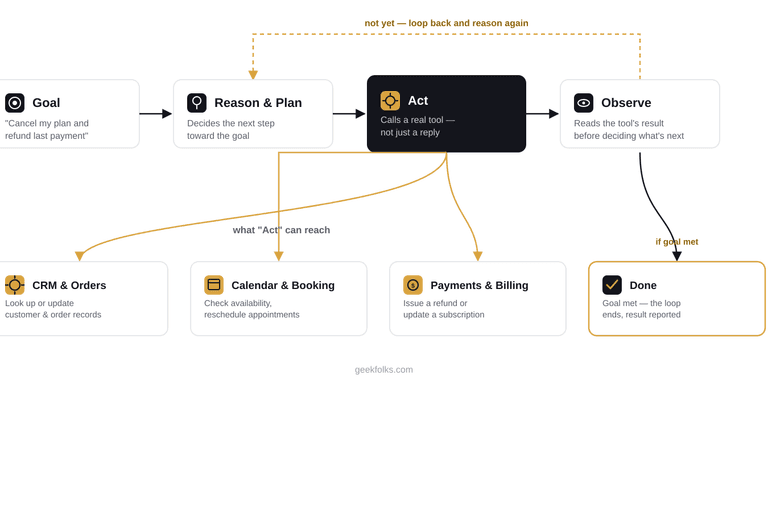
This runs on the same loop covered in How Agentic AI Actually Works: goal, reason and plan, act by calling a real tool — your search index, cart API, or order system — then observe the result before deciding what to do next. The difference from a read-only chatbot is entirely in what the "act" step is allowed to touch. See RAG vs Agentic AI for how to tell which architecture a given feature actually needs — a lot of "agentic" requests are really retrieval problems in disguise.
Where this fits for your store
This is exactly what our Agentic AI for E-Commerce product does: pre-built connectors for product catalog and search, cart and checkout, and order tracking and shipping, with approval gates and spending limits configured to your business rules before anything goes live. If what you actually need is grounded question-answering rather than action-taking, that's a narrower, faster build — see AI Website Chatbot.
Not sure which one your storefront needs? Book a discovery call and we'll look at your actual catalog and order flow before recommending an architecture.