TL;DR: A freelancer is right for a bounded, well-defined task. A fixed-scope agency engagement is right for a project with a clear end state. A dedicated developer is right when the work is ongoing and you need someone who thinks like part of your team, not a vendor. Most growing product companies eventually need all three at different points — the mistake is picking one and forcing every job through it.
Who is this for? Founders and engineering leads deciding how to add capacity to a roadmap that's outgrown the current team.
Three models, three different jobs
The three most common ways to add engineering capacity get compared as if they're competing for the same job. They're not — they're suited to different shapes of work, and treating them as interchangeable is where most engagements go wrong.
When a freelancer is the right call
Freelancers are the right tool for small, self-contained, well-specified tasks: a one-off integration, a design implementation, a bug that needs a specialist. The work is bounded enough that you can hand it off with a clear brief and get a clear deliverable back. What freelancers are not well suited for is ambiguity — work where the requirements will change as you learn, or where the person needs context on your codebase and product that took your own team months to build.
When a fixed-scope project is the right call
A fixed-scope engagement — typically with an agency — fits work with a defined deliverable and a real end state: a new platform, a rebuilt checkout flow, a defined integration. You get a price and a timeline up front, in exchange for the requirements being reasonably well understood before work starts. This is the wrong model for anything exploratory, because scope changes get renegotiated as change orders, which is friction neither side wants.
When you need a dedicated developer instead
Dedicated developers solve a different problem entirely: ongoing product work where the roadmap itself is the moving target, not a single deliverable. A dedicated developer or squad joins your sprint process, reports to your team, and carries context forward from one sprint to the next — the same as a direct hire, minus the multi-month hiring cycle and the fixed cost of a permanent seat you might not need in a year.
Warning
The real cost of a bad fit isn't the invoice — it's the months lost when a freelancer is asked to own a roadmap, or a dedicated developer sits on a single two-week task with nothing to follow it.
A quick way to decide
- Can you write the full spec today? If yes and it's small, hire a freelancer.
- Is there a clear finish line? If yes and the requirements are stable, scope a fixed project.
- Will the work still exist in six months, just different? If yes, that's an ongoing seat — a dedicated developer, not a one-off engagement.
- Do you need someone in your standups making judgment calls? That level of embeddedness is what dedicated developers are built for; it's not realistic to expect from a freelancer or a detached project team.
What "dedicated" actually looks like day to day
A dedicated developer works inside your existing process — your standups, your sprint cadence, your tooling — not a separate workstream you have to translate. Engineers are matched to your stack, vetted before introduction, and typically start on a two-week trial so fit is confirmed on real work before either side commits further. See dedicated developers for how the engagement, vetting, and continuity guarantee work in practice.
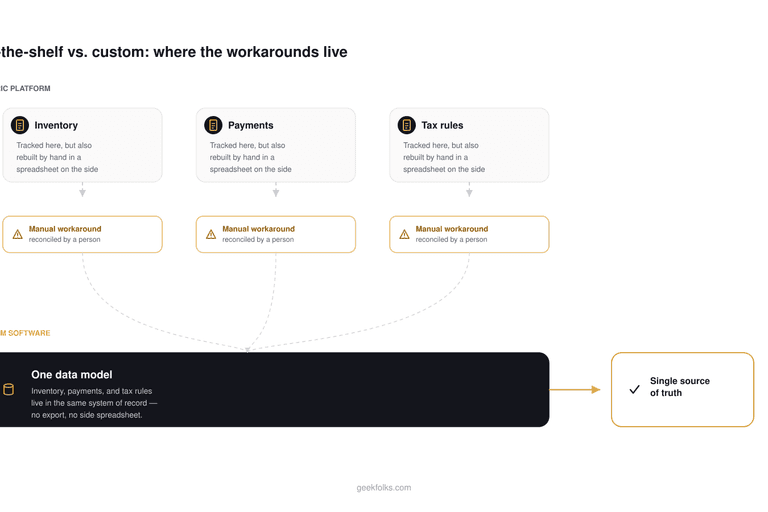
If the real gap isn't people but the software itself, the underlying signals are worth a separate look: signs you've outgrown off-the-shelf software. And if the immediate need is a scoped build rather than ongoing capacity, that's covered in our custom software development service.
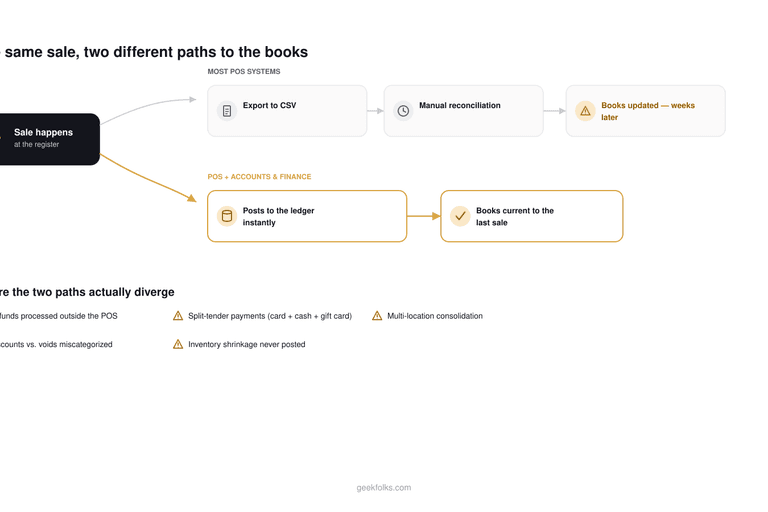
Retail and wholesale roadmaps often surface a people gap and a systems gap at the same time — if reconciliation and ledger accuracy are part of what's falling behind, why your POS numbers never match your books walks through that specific case.
Not sure which of the three fits your situation? Book a discovery call — we'll tell you honestly, including when the answer is "none of ours, hire a freelancer."