TL;DR: If your team maintains a spreadsheet next to your "system of record" to track the things it can't, or a process exists purely to work around what the software won't do, you've outgrown it. That gap is the business case for custom software — not a preference for bespoke over off-the-shelf, but a cost that's already being paid in manual hours.
Who is this for? Operations and finance leads at retail, wholesale, or hospitality businesses trying to work out whether the problem is process, training, or the platform itself.
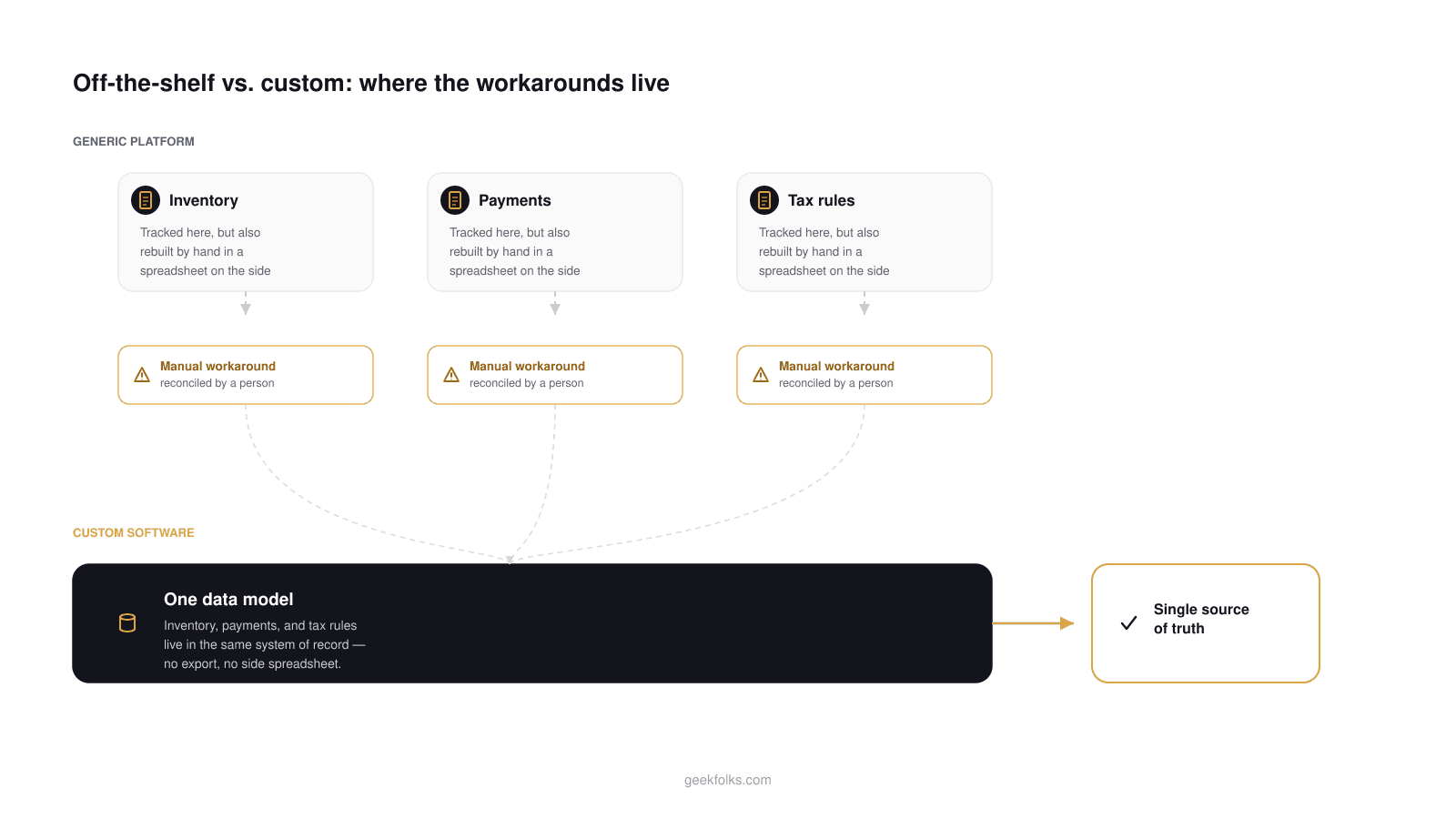
Off-the-shelf software — a SaaS point of sale, a generic inventory tool, a templated storefront — is built for the median business in its category. That's precisely why it's cheap and fast to start with. It's also why it eventually strains: your multi-location inventory, split payment methods, tax jurisdictions, and supplier terms are the parts of your business that make you competitive, and they're exactly the parts a generic data model wasn't built to hold.
The strain doesn't show up as an outage. It shows up as a slow accumulation of manual work that nobody budgeted for.
Six signs the software is the bottleneck, not your team
- Multi-location inventory lives in a spreadsheet. The system of record can't reconcile stock across locations, so someone maintains the real numbers by hand, on the side, every week.
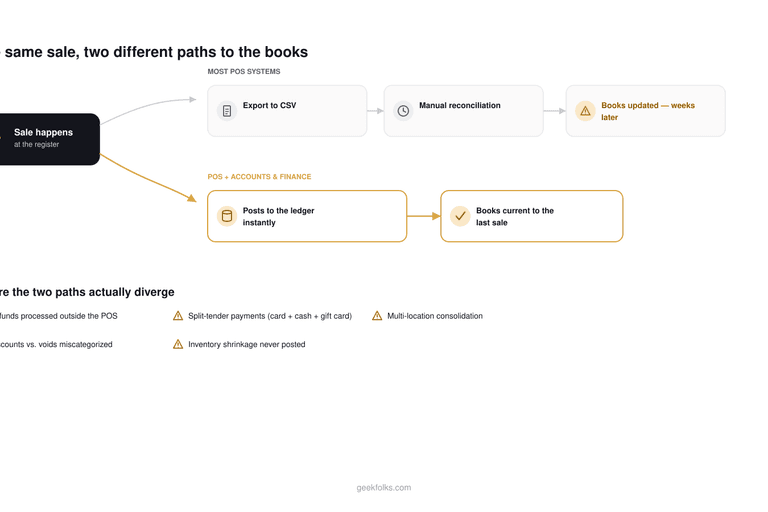
- Payment reconciliation is manual. Split tender, refunds, and multiple processors mean closing the till and closing the books are two separate, disconnected jobs.
- Tax rules are bolted on. Jurisdiction- or category-specific tax handling gets solved with manual overrides at the point of sale instead of configuration.
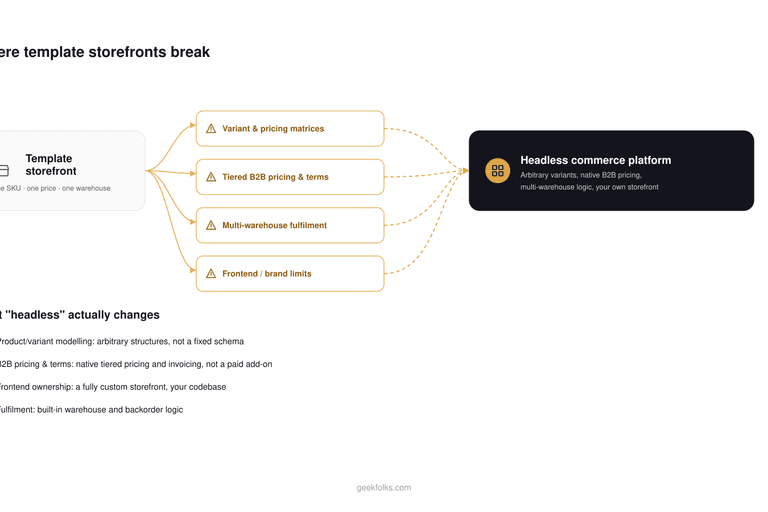
- Supplier terms don't fit the model. Backorders, tiered pricing, and consignment stock get tracked outside the platform because it only understands one kind of purchase order.
- "Integration" means copy-paste. Two systems that should talk to each other are connected by someone exporting a CSV from one and importing it into the other.
- The workaround list keeps growing. Every new hire gets a document titled something like "exceptions and manual steps" that's longer than the actual process.
Warning
None of these show up on a single P&L line. They show up as headcount that scales with transaction volume instead of with real growth — and that cost compounds quietly for years before anyone puts a number on it.
Custom doesn't mean starting from zero
The instinct once this pattern is visible is to assume the fix is a multi-year rebuild. It usually isn't. Most engagements start by replacing the single system causing the most manual work — the inventory model, the reconciliation layer, the tax engine — and integrate it with what's already working. Custom software development done well is scoped around your actual operating model, not a blank slate: discovery and systems mapping first, then an architecture that fits how your business actually runs, delivered in working increments rather than one release at the end of a year.
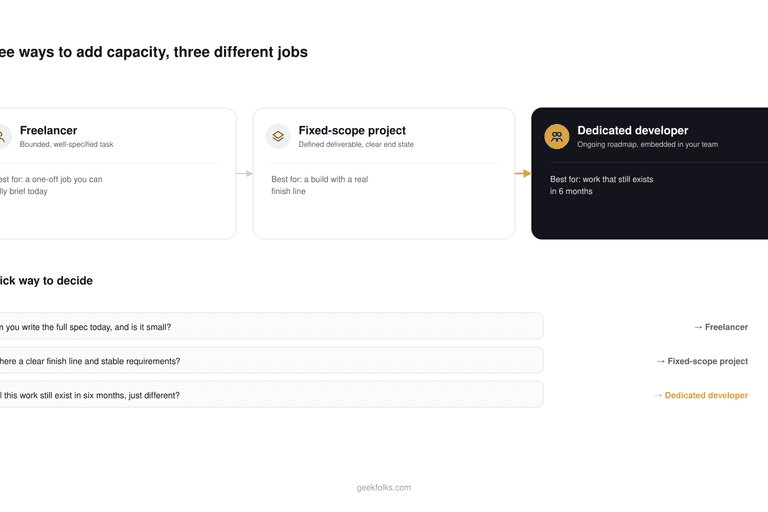
Sometimes the gap isn't the software at all — it's that the team who'd build or maintain the fix doesn't have the capacity. That's a different problem with a different answer: see our post on choosing between a freelancer, an agency, and dedicated developers.
And if the specific pain point is point-of-sale data that never quite matches your books, that's common enough to have its own writeup: why your POS numbers never match your books.
If two or three of the six signs above are true for your business, the conversation worth having is a scoping one, not a rebuild-everything one. Book a discovery call and we'll tell you honestly whether custom software is the right next step, or whether the real fix is smaller than that.